
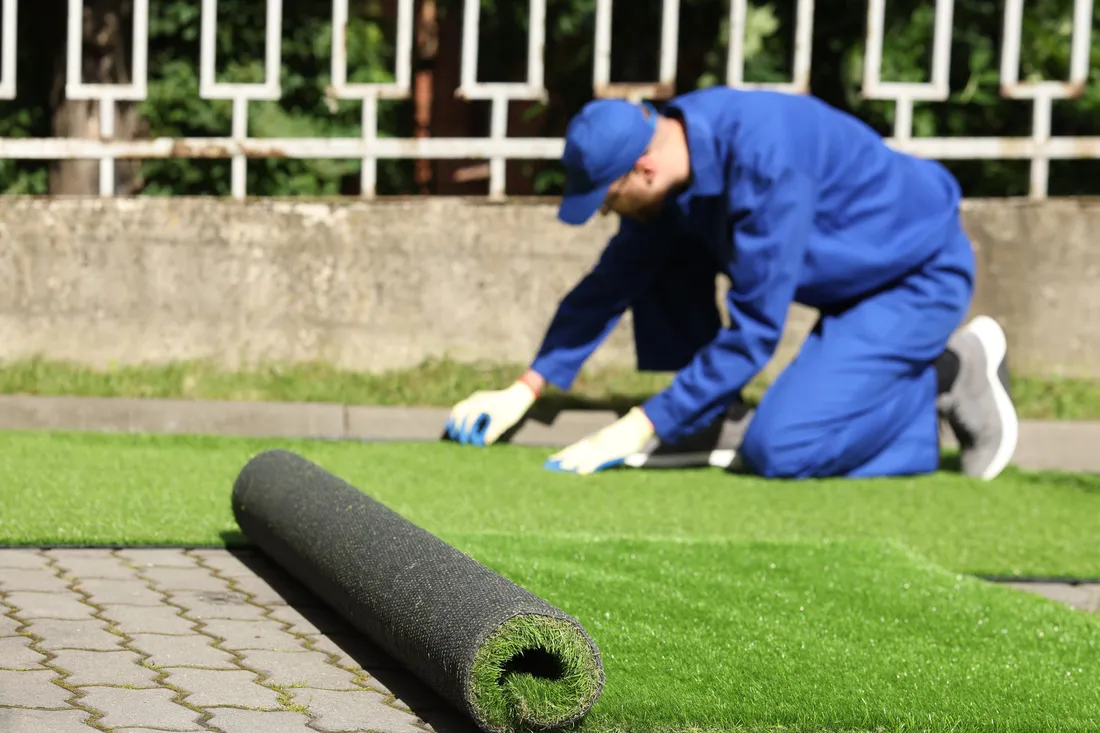
Backyard lawns on clay
The standard Illawarra job: a footslope yard where the subsoil holds water and the grass gives up every winter. The turf is the easy part, the base build is the job.
Between the escarpment and the sea, the ground under your lawn is usually reactive clay, alluvium with a high water table, or old fill. That is what decides whether a synthetic lawn lasts fifteen years or lifts in three. Tell us about the space and one vetted local installer will price it properly.
Tell us a little about your job and we'll pass it to a vetted local installer.
The Illawarra is a narrow band of housing pinned between a sandstone escarpment and the ocean, and this site covers all of it: Wollongong City Council in the north and centre, Shellharbour City Council around Oak Flats and the Shellharbour peninsula, and Kiama Municipal Council in the south. Three councils, one water utility, and a soil map that changes within a single suburb.
That geography is not decoration. The escarpment sheds water onto the footslopes, the footslopes are clay, and the flats below them are alluvium with seasonal water tables. Bureau of Meteorology station 068228 at Bellambi records a mean annual rainfall of 1148.5 mm over a 27-year record, with February the wettest month at 150.5 mm. The old university station 068188 nearer the escarpment recorded 1323.7 mm, though that record ended in 2008, so treat it as a historical figure rather than a current one. Roughly 175 mm a year separated the two sites, and they sit 5.9 km apart.
Everything else on this page follows from those two facts: a lot of water arrives, and much of the ground it lands on does not let it through.
Six job types cover most of what comes through here, from Thirroul terraces to Shellharbour unit courtyards.
The standard Illawarra job: a footslope yard where the subsoil holds water and the grass gives up every winter. The turf is the easy part, the base build is the job.
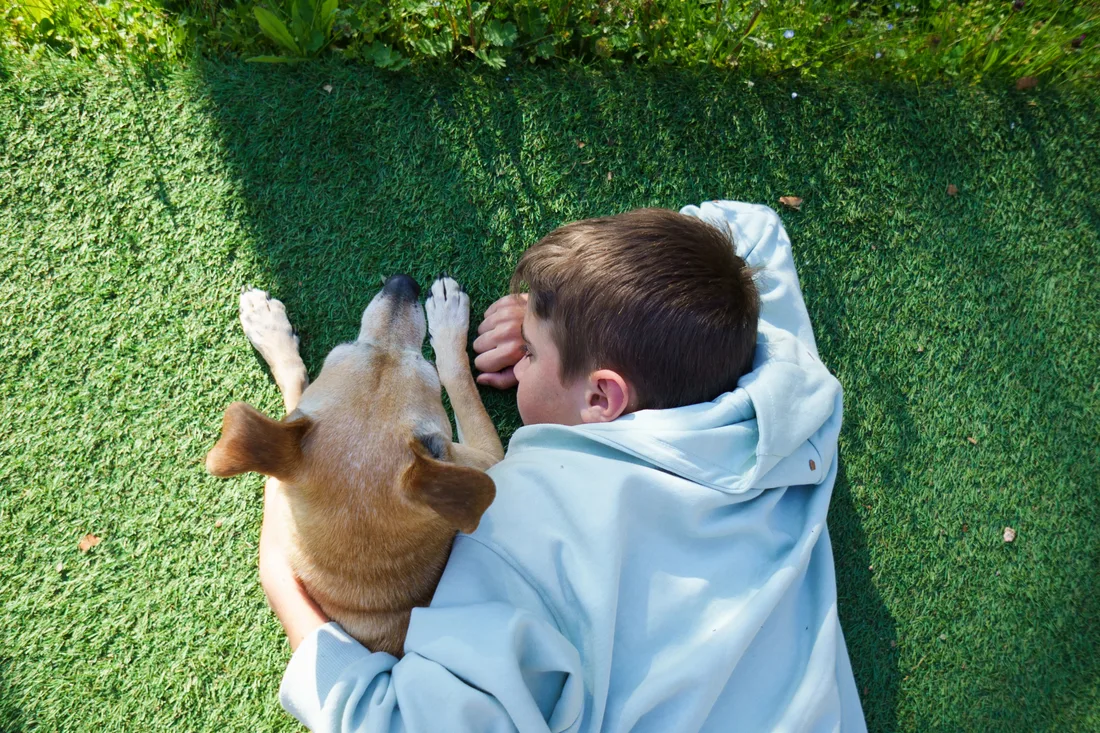
Pet-grade pile with a permeable backing and an odour-managing infill, laid over a base that drains rather than one that ponds.
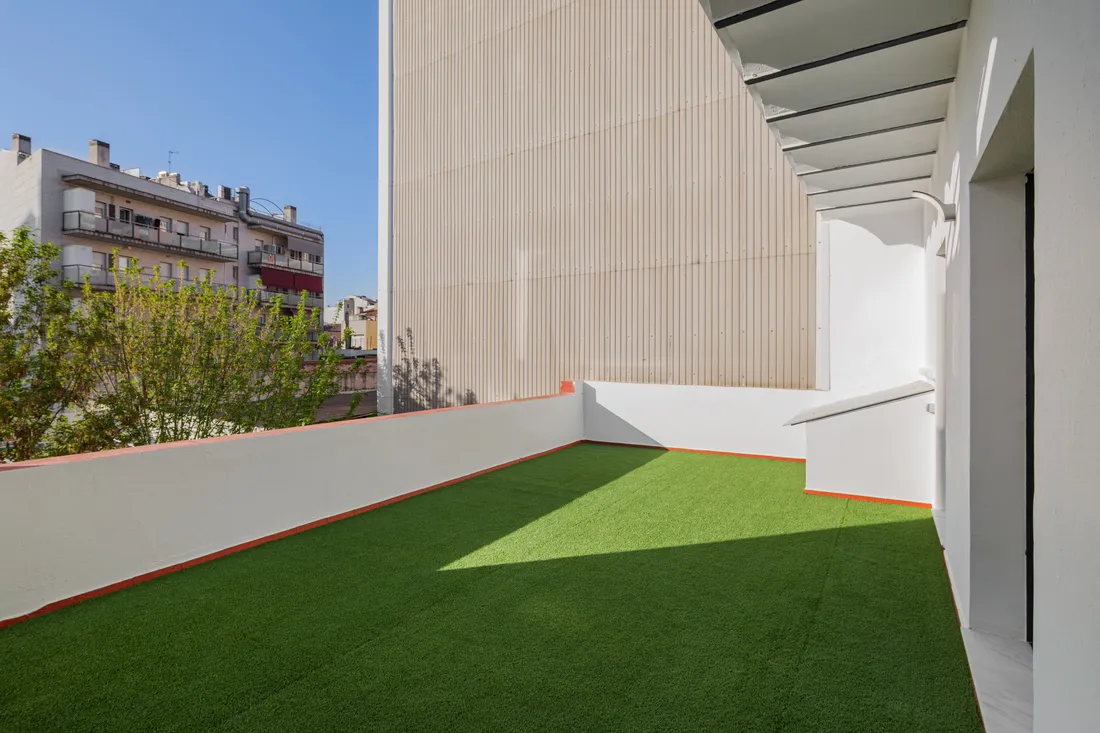
Small enclosed spaces in Wollongong, Corrimal and Shellharbour units, where the strata plan and the by-laws matter as much as the product.
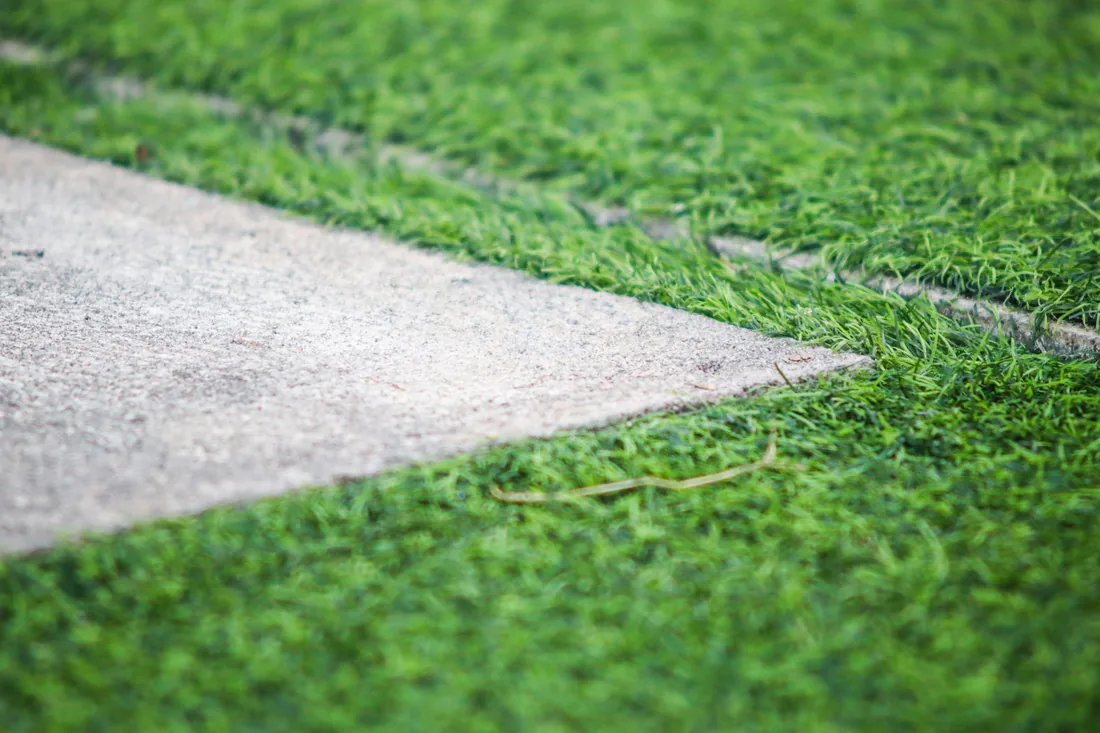
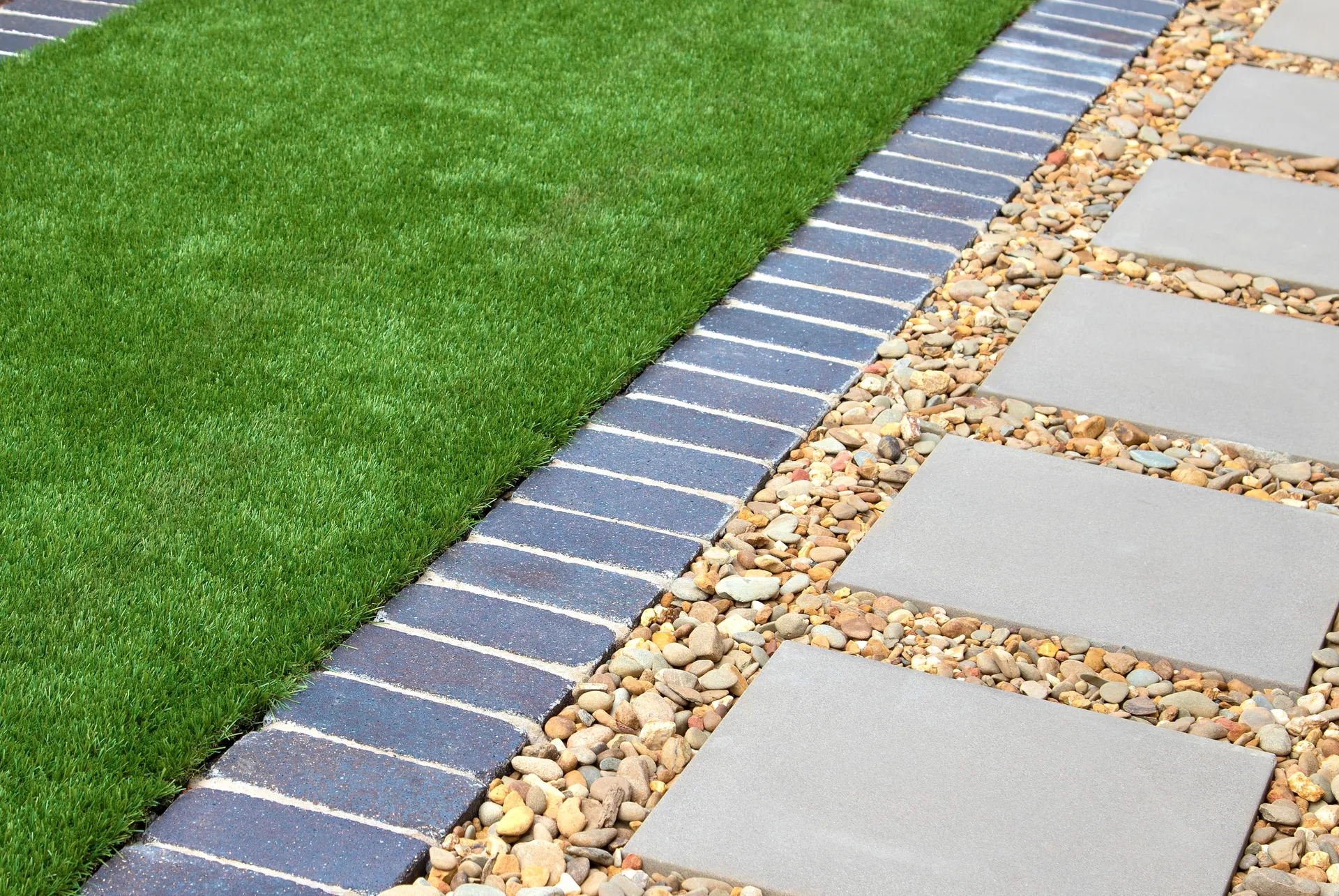
Existing slabs, paved side returns and carport aprons, bonded rather than pinned, with the fall on the slab doing the drainage work.
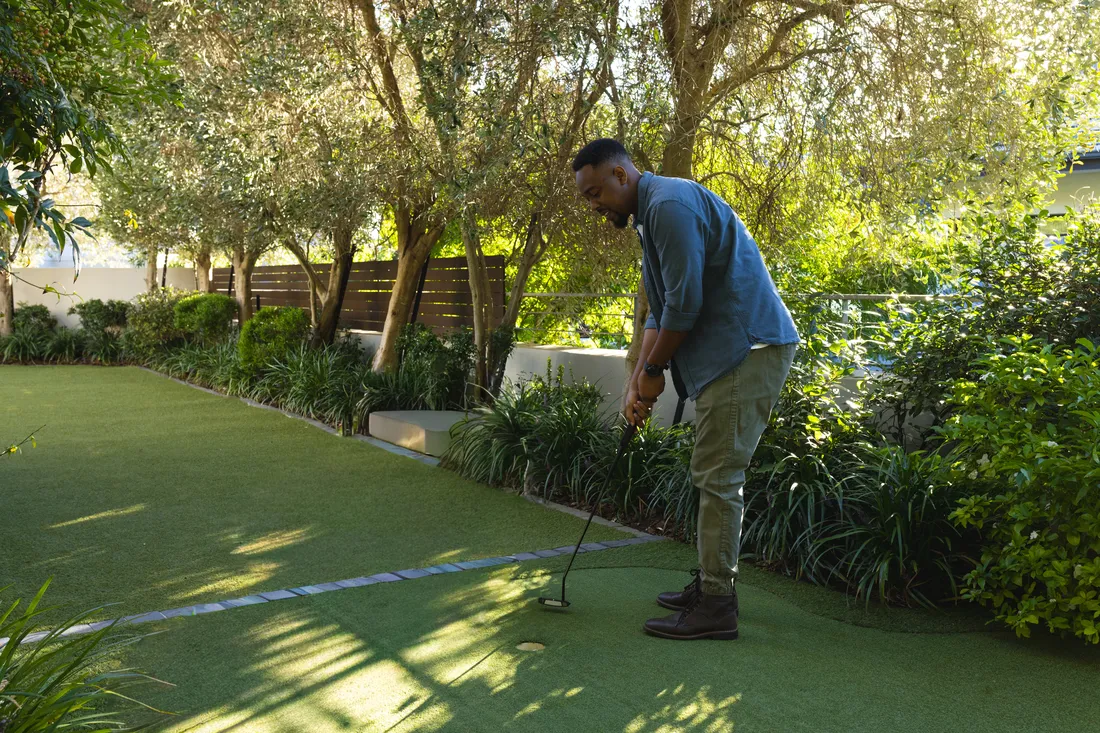
Short, dense pile quoted separately from a lawn, because the base tolerance is tighter and the ball has to run true.
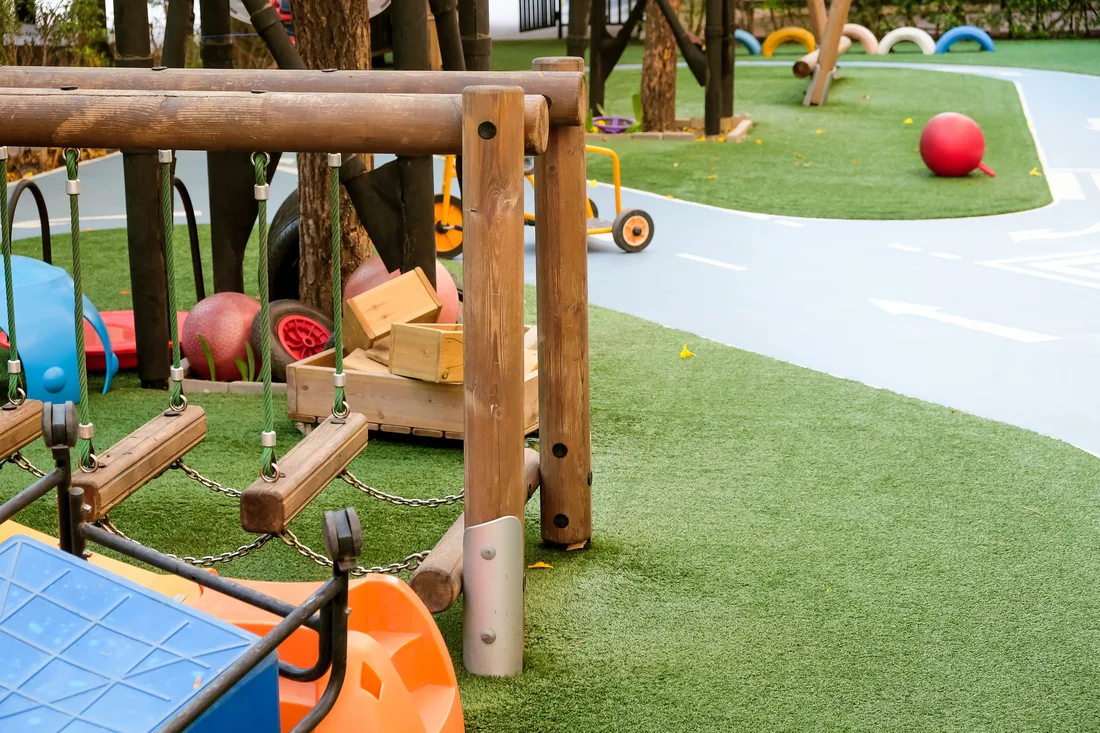
Common areas, childcare yards and playgrounds, where impact attenuation is a per-product certification question rather than a general claim.
| Tier | Supply only ($/m²) | Supplied & installed ($/m²) | Typical lifespan |
|---|---|---|---|
| Budget | $25–40 | $75–95 | 5–8 years |
| Mid | $40–60 | $95–130 | 10–15 years |
| Premium | $60–100+ | $130–160+ | 15–20+ years |
Supplied-and-installed ranges per square metre, compiled from published 2025-26 Australian supplier and industry pricing (Premier Grass, EasyTurf, All Seasons and others). These are indicative national figures, not Illawarra quotes. Ground conditions here push base preparation costs around more than the product tier does, which is why a measure on site is the only number that binds.
NSW publishes soil landscape mapping for the whole Illawarra, and the unit reports say plainly what local turf companies have long marketed on. The Gwynneville unit, which covers 58.2 per cent of Corrimal and 56.6 per cent of Fairy Meadow, carries a summary limitation of "Reactive subsoils and impermeable, low wet bearing strength clay subsoils", with a low-permeability subsoil on its lower slopes. Note that the same report's Surface Movement Potential section describes those materials as "stable to slightly reactive", so the two sections of that one document do not say the same thing and we name which we are quoting.
Further inland, the Berkeley unit under about a fifth of Figtree is blunter: "Highly reactive soils", with "Locally impeded drainage" and "Seasonal waterlogging (localised)". And at Unanderra, nearly half the suburb is mapped as artificial fill whose composition the government itself declines to predict. The full picture, unit by unit and suburb by suburb, is in our guide to reactive clay and impeded drainage on the escarpment footslopes.
The practical consequence is simple. On ground like this, the difference between a good and a bad synthetic lawn is decided below the grass: excavation depth, the base material, how many compaction passes it gets, and where the water is sent. That is also the part of the job you cannot inspect once the turf is down.
Wollongong, Shellharbour and Kiama are all Sydney Water supply areas. Sydney Water names their suburbs in its Illawarra Water Delivery System documentation, so the applicable rules are the Water Wise Guidelines, gazetted on 1 December 2020 and, in the gazette's own words, in force "until further notice". Sydney Water describes them as mandatory rules to follow "every day year round". They are not drought restrictions and we do not call them permanent, because the authority does not.
There is no artificial turf rebate in New South Wales, or anywhere in Australia. Sydney Water's WaterFix covers indoor fixtures such as taps, showerheads and toilets, and its pension rebate is a billing concession. Neither touches landscaping.
Suburb, rough area, and what the space is for. Thirty seconds of typing.
Your enquiry goes to a single vetted installer covering the Illawarra, not a panel that then sells your number on.
Ground conditions here vary street by street, so nobody serious prices an Illawarra yard from a satellite image.
A written quote, no deposit to see it, and no follow-up campaign if you say no.
These are the Illawarra suburbs we get asked about most. Each page carries that suburb's own mapped soil composition and its council's actual position, not a name swapped into a template. If yours is not here, send the form anyway.
One of three, and it matters if the work touches the verge. Corrimal, Fairy Meadow, Thirroul, Bulli, Balgownie, Unanderra, Horsley and Figtree sit in Wollongong City Council. Shellharbour is Shellharbour City Council. Kiama is Kiama Municipal Council. Inside your own fence line, none of the three publishes a rule about synthetic turf. Outside it, the nature strip is public land and the position differs by council.
The Illawarra is supplied by Sydney Water, which lists Wollongong, Shellharbour and Kiama suburbs in its Illawarra Water Delivery System. Its Water Wise Guidelines are mandatory and Sydney Water describes them as applying every day year round. Lawns and gardens may be watered before 10am or after 4pm using a hand-held hose with an instant on-off mechanism, a sprinkler or a watering system. Smart watering systems and drip irrigation may run between 10am and 4pm, which is unusual: neither Hunter Water nor Central Coast Council allows that. Checked August 2026.
It puts reactive clay and impeded drainage under a lot of the flat land between the ridge and the sea. The NSW soil landscape report for the Berkeley unit, which covers about a fifth of Figtree, states 'Highly reactive soils' in its Surface Movement Potential section and lists 'Locally impeded drainage' among its limitations. Reactive clay swells and shrinks with moisture, and water that cannot leave sits in the base. Both are solved by how deep you dig, what you compact and where you take the water, not by which grass you choose.
Because 47.3 per cent of Unanderra is mapped as Disturbed Terrain, which is the government's term for artificial fill. The unit report says the ground 'has been disturbed by human activity to a depth of at least 100 cm', warns of 'soil impermeability leading to poor drainage', and recommends that 'a survey at a suitable scale as well as geotechnical analysis should be undertaken because of variability of materials throughout the sites'. Nobody can tell you what is 300mm down in a fill site without looking.
Hotter than grass, and the sea breeze does not cancel that. Western Sydney University researcher Dr Sebastian Pfautsch has recorded unshaded artificial turf approaching 100 degrees Celsius, and playground turf above 80 degrees on days under 30 degrees ambient. Bellambi AWS records a January mean maximum of 25.0 degrees, which is mild by Australian standards, but surface temperature is not air temperature. Lighter yarn runs cooler, shade helps most, and hosing drops the surface quickly. If the yard bakes from noon onward, factor it in before you commit.
No. We are a quotes and information service, and we pass your enquiry to one vetted local installer. We publish the pricing data and the council and soil research openly so you can judge the quote you receive rather than take it on faith. There is more on how that works, and what we deliberately do not do, on our about page.
Send the space and the suburb. One vetted local installer will measure it and put a firm number on it, free and without obligation.
Tell us a little about your job and we'll pass it to a vetted local installer.